Wednesday, March 27, 2019

Brisket BBQ Sauce Recipes will they make your Brisket Better?

Brisket BBQ Sauce Recipe Glaze
The hunt for the perfect brisket bbq sauce has never been as storied as the search for the monster of the blue lagoon.  It seems every corner of the United States is famous for producing some sort of barbeque sauce and why not, the term bbq sauce, and barbecue sauce recipes are the highest searched terms in the world of barbecue.  The bbq sauce term is so highly prized that companies who run Pay Per Click campaigns during the month of June through September 2018 pay vast sums just to be listed on the front page of Google’s BBQ sauce page.

We at Jake's Famous Foods been building and selling BBQ Sauce and BBQ sauce recipes for the past 16 years now. And because we believe that everyone should have the freedom and choice to consume the brisket they've always wanted we've put together a collection of 10 of our most popular brisket bbq sauce recipes.

Barbecue and bbq is very personal and when you invest time and energy into the process you want to ensure that the end result justifies the effort that went into the process.  For this post we did not start out to put out long stories or discussions of wet versus dry barbecue sauce.  Instead what we’ve done is collect 10 of the best BBQ Sauce Recipes we’ve ever made.  And because you’re so nice…we’ve added in some Bonus brisket bbq sauce recipes that can be made with typical everyday kitchen ingredients.  One thing that doesn't get enough attention is having a recipe that can be made with simple everyday ingredients.  If you've got black pepper, salt, garlic and some form of syrup or tomato paste or ketchup you can make these recipes.  So, next time you decide to barbecue brisket print or list the ingredients in one of these favorite recipes then build your bbq sauce from scratch.

One thing we will also tell you is that each of these recipes is taken directly from sources in the region.  We at Jake’s make natural products so some of the ingredients like whole bottle Ketchup and Corn Syrup you’ll never seen built into our recipes.  Instead what you will see is our versions of these classic favorites that we sell everyday.  Take for example our  Ball Park Ketchup is a deconstructed version of that very famous brand Ketchup with a few major exceptions.  The fact is we've taken out the controversial notes like Corn Syrup and chemical additives and instead have made our version gluten and MSG (Mono Sodium Glutamate) Free, you won't find those ingredients in our sauces.  The result a cleaner, better tasting, more natural brand of Ketchup.  And with that you'll be making a cleaner, better tasting bbq sauce recipe for you and your friends and family.

While it seems no one can nail down the exact origins in which the first barbecue sauce was created we do have some historical data on when it was first sold.  Many believe the first barbecue type sauce was created in the 15th century about the time that Christopher Columbus sailed the planet bringing back a multi spiced, liquid combination from Hispaniola.  Others say the sauces were first collected in the 17th century somewhere in the American colonies. 

Jumping ahead the first commercially produced barbecue sauce was made by the Georgia Barbecue Sauce Company out of Atlanta and advertised in the Atlanta Constitution, January, 1909.  Heinz released its first version of barbecue sauce in 1940 followed by Kraft who took the novel approach of producing spices and oils which could be combined together into bags.

Regarding the appropriate use of barbecue, barbecue or barbque, we’ve found it all depends on where your from.  In most cases barbecue, barbeque, and barbque all mean the same thing referencing the act of cooking and grilling while bbq, tends to reference a meal or event.

The bbq sauce recipes we've included here as mentioned are regional style.  The first in the styles is Memphis Style BBQ Sauce.  What would life be like if Memphis Barbecue Sauce wasn’t invented?  I think our taste buds would be the big losers if such a thing had ever happened.  Memphis always reminds me of a creamy sauce blended with celery and garlic and a whole host of other fine ingredients. 

Sample Brisket BBQ Sauce Recipes - That Work Right Now


Memphis Style Brisket BBQ Sauce

Ingredients
  • 1 tablespoon garlic powder 
  • 1 tablespoon chili powder 
  • 1 tablespoon onion powder 
  • 2 cups ketchup 
  • 1 cup apple cider vinegar 
  • 3 tablespoons Worcestershire sauce 
  • ½ cup brown sugar 
  • ½ cup molasses 
  • ½ cup yellow mustard
  • ½ tablespoon ground black pepper 
  • ½ tablespoon salt 
  • ½ tablespoon ground celery

Carolina Style The richness of red and black pepper all blended together into a vinegary base is all you need to know about good Carolina BBQ Sauce. 

Ingredients

  • 1 cup vinegar 
  • 1 teaspoon coarse black pepper 
  • 1 teaspoon red pepper flakes 
  • 1 teaspoon salt 
  • 2 tablespoons brown sugar 
  • ¼ cup ketchup ½ cup water

Smokehouse style Brisket BBQ Sauce One of my all-time favorites, a nice bite with a gentle sweetness that compliments almost any meat.

Ingredients
  • 1-1/2 Cups Tomato Puree 3 Tablespoons Brown Sugar  
  • 4 Tablespoons Molasses 
  • 2 Tablespoons Apple Cider Vinegar  
  • 1 Tablespoon Honey 
  • ½ Tablespoon Liquid Smoke Flavor 
  • ¾ bottle Budweiser beer 
  • 2 tablespoons Worcestershire sauce 
  • 1 tablespoon sweet smoked paprika 
  • 1 teaspoon smoked Chipotle powder 
  • ½ teaspoon cayenne pepper 
  • 2 tablespoons unsalted butter 
  • 1 tablespoon onion powder 
  • 1 tablespoon garlic powder cracked black pepper to taste

Red Wine BBQ Sauce Rich wine tannins complement the fullness to tomatoes and brown Sugar.

Ingredients

  • 1-1/2 Cups Tomato Puree 
  • 3 Tablespoons Brown Sugar  
  • 4 Tablespoons Molasses 
  • 2 Tablespoons Apple Cider Vinegar  
  • 1 Tablespoon Honey
  •  ½ Tablespoon Liquid Smoke Flavor 
  • 2 Tablespoons Worcestershire Sauce 
  • 1 cup red wine 
  • 2 cloves minced garlic 
  • 1 teaspoon fresh rosemary finely chopped 
  • ½ teaspoon fresh thyme

Asian Style BBQ Sauce -A fantastic blend utilizing soy, rice wine and ginger.

Ingredients
  • 1-1/2 Cups Tomato Puree 
  • 3 Tablespoons Brown Sugar  
  • 4 Tablespoons Molasses 
  • 2 Tablespoons Apple Cider Vinegar  
  • 1 Tablespoon Honey
  • ½ Tablespoon Liquid Smoke Flavor 
  • ¼ cup soy sauce 
  • 2 tablespoons Mirin rice wine 
  • ½ tablespoon ginger powder

Chicago Sweet Style Who can forget the flavors of Old Chicago.  Subtle and bold all at the same time.

Ingredients
  • 1-6oz. can tomato paste 
  • 1-1/2 Cups water 
  • 1-1/2 Tablespoons. canned pineapple juice 
  • 1/2 heaping teaspoons. kosher salt 
  • 1/2 Teaspoon. garlic powder 
  • ¾ Teaspoon. liquid smoke 
  • 1/4 Cup white vinegar 
  • ¾ Tablespoons. fresh squeezed lemon juice 
  • 4 Tablespoons molasses 
  • 3 Tablespoons light corn syrup 
  • 3 Tablespoons Brown sugar 
  • 3 Tablespoons cold water  
  • 1 Tablespoons corn starch for slurry to thicken sauce

Kansas Style BBQ Sauce A wonderful sauce combined with savory butter, molasses, garlic, brown sugar and more.

Ingredients
  • 2 Cups Ketchup 
  • 2 Cups Tomato Sauce 
  • 1-1/4 Cups Brown sugar 
  • 1-1/4 Cups Red Wine Vinegar 
  • ½ Cup Unsulfured Molasses 
  • 4 Teaspoons Hickory Liquid Smoke 
  • 2 Tablespoons Butter 
  • ½ Teaspoon Onion Powder 
  • ½ Teaspoon Garlic Powder 
  • ½ Teaspoon Chili Powder 
  • 1 Teaspoon Paprika 
  • ½ Teaspoon Celery Seed 
  • ¼ Teaspoon Ground Cinnamon 
  • ½ Teaspoon Cayenne Pepper 
  • 1 Teaspoon Salt 1 Teaspoon Coarse Ground Black Pepper

Texas Style Brisket BBQ Sauce Texas, it’s a whole other Barbeque Sauce.

Ingredients
  • 3 Tablespoons Brown Sugar 
  • 1 Tablespoon Ground Paprika 
  • 1 Teaspoon Salt 
  • 1 Teaspoon Dry Mustard 
  • ½ Teaspoon Chili Powder 
  • ¼ Cup Distilled White Vinegar 
  • 1/8 Teaspoon Cayenne Pepper 
  • 2 Tablespoons Worcestershire Sauce 
  • 1-1/2 Cups Tomato Vegetable Juice Cocktail 
  • ½ Cup Ketchup 
  • ¼ Cup Water 
  • 2 Cloves Garlic Minced

Southern Style BBQ Sauce Oftentimes people get the difference between Smokehouse Style and Southern Style confused.  To a Barbeque Sauce aficionado they couldn’t be more different.

Ingredients

  • 2 Quarts White Vinegar
  • 2 Cups Splenda No Calorie Sweetener (As an Option 2 Cups White Sugar)
  • 1-1/2 Cups Ketchup
  • ½ Cup Worcestershire Sauce
  • ¼ Cup Hot Sauce
  • ¼ Cup Salt
  • ¼ Cup Ground Black Pepper

Mexican BBQ Sauce My Best friends say Ole to this recipe

  • 1 Cup White Vinegar
  • 2 Tablespoons Sugar
  • 2 Tablespoons Salt
  • 2 Tablespoons Black Pepper
  • 1 Tablespoon Cayenne Pepper
  • ¼ Stick Salted Butter
  • 1 Teaspoon Lemon Juice
  • 1 Cup Ketchup
  • ½ Teaspoon Paprika

Bonus Recipes: 1

Florida Style BBQ Sauce -Some of the best BBQ I’ve had in my travels was in Florida warm weather and afternoon rains. 

Ingredients

  • 24 ounces bottle ketchup
  • 1 pound dark brown sugar
  • 1/2 tablespoon prepared mustard
  • 1 tablespoon black pepper
  • 1/2 cup onion juice
  • 3/4 cup orange juice
  • 3/4 cup pineapple juice
  • 3/4 cup mango juice
  • 4 tablespoons corn starch

Bonus Brisket BBQ Sauce Recipes: 2

California Style BBQ Sauce We can’t leave out California.  Many people say that California doesn’t have a style and that it is simply the blending of recipes from people and places like Oklahoma, Texas, Arkansas and Colorado.  We believe California does have its own unique style.   

Ingredients

  • ¾ Cup Granulated Sugar
  • ½ Cup Japanese Soy Sauce
  • ½ Cup Tomato Ketchup
  • ½ Cup Dry Sherry
  • 3 Cloves Garlic Crushed
  • 1 Teaspoon Ground Black Pepper
  • ½ Cup Molasses

Bonus Recipes: 3

New Mexico Style BBQ Sauce Vast open spaces, large mild and hot Pasilla peppers and massive festivals  Centered on all things hot and spicy.

Ingredients:

  • 2 Tablespoons Unsalted Butter
  • ½ Medium Red Onion Finely Diced
  • 1 Garlic Clove Finely Diced
  • 6 Plum Tomatoes Coarsely Diced
  • ¼ Cup Ketchup
  • 2 Tablespoons Dijon Mustard
  • 2 Tablespoons Dark Brown Sugar
  • 1 Tablespoon Honey
  • 1 Teaspoon Cayenne
  • 1 Tablespoon Ancho Chile Powder
  • 1 Teaspoon Pasilla Chile Powder
  • 1 Tablespoon Worcestershire

Louisiana Style BBQ Sauce From the land of Beignets, red beans and rice, Etoufee and King Cake.

Ingredients

  • 2 Tablespoons unsalted butter
  • 3 Green onions
  • 2 Tablespoons garlic salt
  • 6 Tablespoons chili powder
  • 1-1/25 Tablespoons pepper
  • 16 Oz ketchup
  • 1 Quart water
  • 2 Tablespoons Tabasco Sauce
  • 1/3 Cup mustard
  • 1/2 Cup sugar
  • 1/4 Cup light brown sugar
  • 1 Cup White wine vinegar
  • ½ Can of beer
  • 1/4 Cup Burgundy wine

Note, there's been some conversation about brisket bbq sauce recipes with heat and what would be do to make these recipes have that special bite that so many people love.  We can think of a couple of ways to add heat to your perfect bbq sauce recipe.  One is the simple use of more black pepper.  Just ratchet up the amount of black pepper by 2 or 3 times to drive up the spiciness of the bbq sauce recipe.  The next way to drive up heat would be the addition of chili powder.  Most people have some form of chili powder in their cupboards so the addition is fairly simple.  And much like black pepper you would either bump up the amount in an existing recipe or make the addition of 1 tablespoon first then testing the blended sauce.  Afterward if you still want more heat we suggest adding another tablespoon of chili powder.

Now comes the fresh versions of heat.  Let's consider the addition of green jalapeno peppers.  These jalapenos add a nice burst of heat that can permeate the entire batch of sauce. One must be careful when adding jalapeno peppers.  First, testing to ensure that the level of jalapeno is enough then ensuring that your hands are washed so as not to get the juices into your eyes or on your mouth. Start small and work up to the right amount before trying the sauce out on friends or family.  We've found that 1/2 of a jalapeno is more than enough heat to drive up the spiciness in a bbq sauce recipe.

BBQ Sauce 

Next come habanero peppers for increasing levels of heat.  There are some pretty great Scoville scale charts out there to identify the exact level and types of heat desired.  Habaneros can be daunting and must be balanced otherwise you can expect your bbq sauce to have a steady flow of heat and not much flavor.  Blend the habanero with items like ginger or celery which are compliments but won't drive the heat and won't overpower the end result.  If you're making the sauce for yourself then you can get some pretty audacious levels of heat.  But be careful so that your friends are in the line of fire where heat is concerned especially if they only like mild bbq sauce.

Blending Tips:  When it comes to blending it's a good idea to start over low heat.  Allow the sauce to meld together stirring constantly until you've reached a uniform color.  We like cooking the sauce for at least 15 minutes then pouring the sauce into a container.  After the sauce is placed in a container allow the sauce to rest in the refrigerator for at least two hours minimum.  This resting period will actually allow continued melding of the flavors and will create as we as in the business a nice level of maturity.  Once rested serve of baste on at will.

Here's a great video with instruction on make some popular bbq sauce recipes.  View this short video that gets right at the heart of making some great bbq sauces for you, your friends and family.


                                                     How To Make BBQ Sauce

To help satisfy the bbq urge we’ve built a boat load of products that are on the market right now and available when you shop natural bbq sauce online and when your order bbq sauce online. Below we’ve listed our key seven dry rubs and our standing of natural BBQ sauces. These all represent our basic stable of natural bbq rubs and sauces for sale each perfect for their role in improving your brisket..

Tri Tip Steak and Rib Rub
Santa Barbara Rub
San Ysidro Rub
Santa Maria Dry Rub
Memphis Dry Rub
California Chipotle Dry Rub
California Chicken Dry Rub
Really Good Mild Barbecue Sauce
Really Nice Medium Hot Barbecue Sauce
Really Hot Barbecue Sauce
Maple Bourbon Barbecue Sauce
Memphis Blues Barbecue Sauce
Texas Style Inspired Barbecue Sauce

Our finest bbq rubs and sauces for sale are available online on our website Jake's Famous Foods. See our natural bbq rubs and sauces for sale and shop natural bbq sauce online today.

Now that you've received some pretty great brisket bbq sauce recipes we got some great deals for you on our SPECIALS PAGE you'll get 10% OFF pricing on our award winning dry rubs, sauces and seasonings. You'll Get that immediate 10% OFF when you use Jake's product savings Code: 1707200910 at checkout.

We hope you’ve enjoyed these 10 Brisket BBQ Sauce Recipes.  Also, we hope you’ve enjoyed the additional recipes we’ve provided.  We believe the best brisket bbq sauce recipe is the one you use most.  Take time  to review each recipe then build and adjust to match your cooking Style.

For More Brisket BBQ Sauce Recipes see the recipes on our BBQ Recipes page.


Jake

Thursday, March 21, 2019

The 7 Best BBQ Rubs You Can Buy and Why You Should


The 7 seven best bbq rubs is a bold statement especially to someone who has never used a barbecue rub or even held a bbq rub. Personal preference on the exact usage of terms is key when discussing barbecue.  But for someone who has been steeped in the physiology, mythology, biology and all of the other "ologies" related to barbecue, then one begins to pay attention.  So, we'll focus on what we consider to be the best bbq rubs in existence, not because these are products that we are familiar with but because of the way in which these very products deliver their unique brand of awesomeness to create some amazing taste results for a barbecue. 


At Jake's Famous Foods we'll start with a base amount of knowledge in understanding what a rub actually is and what it does.  Now the simplest of all rubs is salt which has been around for thousands of years.  I'm sure every person thinks they know what salt really is and what it does.  And from our basic days in high school chemistry we learn about the existence of salt, or that white stuff we've been shaking on our burgers and french fries for years.  But would it surprise you to know that salt is a mineral composed primarily of sodium chloride (NaCl).  A mineral being inorganic or classified as something that is not alive or living, like vegetables or roots in the earth.  Salt is a chemical compound of sodium and chloride and in its natural form as a crystalline mineral is known as rock salt or halite. 

Sodium which most people simply classify the terms as too much sodium intake but rarely say too much salt intake serves a vital roll in maintaining the human condition in that it is an electrolyte, and performs the duty of helping nerves and muscles function correctly aiding in what is known as the  osmotic regulation of water content in body organs or in laymen's terms keeping the fluids in your body in balance.  

Salt is also a preservative so when combined with other elements assists in storing or keeping foods for a longer than standard length of time especially if the meats or food item was left out in the open to suffer the ravages of the elements.  

Salt was often paired with its most central of spices, things like cumin, oregano, and turmeric but it wasn't until the combination of salt and pepper that the normal every day expectation was made.  One could never have a table setting that didn't combine salt and pepper.  And certainly you would never have a table setting of say salt and turmeric, or salt and oregano but no pepper.  Your guests would consider you odd for such pairings and would immediately if not politely ask, then demand to have their fair share of pepper on hand.  

The difference between bbq rubs and seasonings.
It is important to note this small but not innocuous difference between a bbq rub and a bbq seasoning.  BBQ Rubs are meant to be shaken and layered onto meats that will be allowed to bathe in the rubs for a period of time.  While bbq seasonings are just the opposite, being place on the intended meat sometimes minutes before they hit the grill to play a role in the Maillard effect of browning the meats.  Seasonings can and will be burned off the meat quickly if not properly allowed to rest and be absorbed through the Myofibril structures of the meat which supports holding the seasoning while effectively curing the meat with flavor.  

When considering the necessities of seasonings, and rubs, and mixes or pastes one must consider what the meat is, and believe me when we discuss bbq rubs we center only on their uses on meats.  And we consider the intended result of the selection efforts.  Meaning, are you striving to achieve a flavor result that leaves a salty, savory, bitter, sugary or natural taste of the original starting product.  Our belief is that most of the customers we see want the natural flavor of the meat but realize they can't spend $100 a pound on something so the best way to drive a less than superior cut of meat up the taste scale is to thoroughly season the meat altering its flavor.  To achieve that an individual may blend granulated or powdered forms of garlic, paprika, salt, pepper, sugar, turmeric, oregano, onion and more toward achieving the end result.  

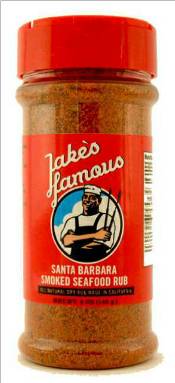
So, with that in mind we'll finally get to what we believe to be the best bbq rubs to buy.  Starting with our longtime mainstay and first actual product Santa Barbara Smoked BBQ Rub.  

This Santa Barbara Smoked Rub was formerly known as Southwestern Hickory Dry Rub because in it's original form it concentrated on a combination of California Chili Powder and hints of Cayenne pepper with subtle combinations of coarse ground black pepper, garlic, onion, smoked salts and of course hints of brown sugar.  The resulting combination of flavors yielded a spicy, peppery mix with savory overtones that complimented particular items like pork ribs or beef ribs.  This was true to form bbq rub heaven all wrapped up in one.  


Santa Barbara Smoked Dry Rub photo

Some have called this the ultimate rub but we have to keep in mind terms like those are subjective so we'll just take it on faith that a large audience really like the dry rub for the results that it yields.  The rub was renamed when we chose to widen the nature of the rub.  We believed we could serve a growing fish centric market by increasing some of the key elements along with the conversion to a maple based sugar as opposed to brown sugar.  The results have and continue to be phenomenal. 

We take a move away from a spicy, peppery bbq rub into one that is the true essence of barbecue rubs.  This Tri Tip Steak and Rib Rub although a mouthful to say is highly the most versatile bbq rub in existence.  Performing triple duty on steaks, ribs, and tri tip.  Each meat has their own unique role in American culture and the Tri Tip, Steak, and Rib Rub deserves a spot on the podium.  This is the most impact focused combination of spices, herbs and salts we have ever made.  The bbq rub is a revelation in the use of smoked salt, herbs of oregano and tarragon, along with savory elements like paprika, onion, and garlic paired with just the right amount of golden brown sugar.


Tri Tip, Steak and Rib Rub photo

This is a bbq rub that can be shaken on allowed to achieve having great "stickiness" at room temperature then moved quickly to the grill for the best tasting steaks you've ever made.  Or applied with the smallest amount of olive oil to thick cuts of tri tip that are rested for minimum periods then properly seared and roasted to perfection.  Not to mention the all popular rib combinations where ribs are brought to room temperature then rubbed with the bbq rub and allowed to rest for a minimum period then barbecued slowly for 5 to 6 hours to produce the tenderest ribs ever.  This my friends is the "creme de la creme" of bbq rubs.  It's easy to use, comes in a convenient container, and stores for 2 years without losing its vitality.  Some of the best bbq rub seasonings in existence today. 

The California Chipotle Dry Rub is borne from the period of time when society as a whole discovered the existence of Chipotle.  And for about 10 years it was all things Chipotle from practically every direction you could think of fresh off the heels of Mesquite firewood cooking.  This is one of the few times in which savory seasonings were blended together with subtle sweet but spicy blends of dried Chipotle peppers and sugars.


California Chipotle Dry Rub photo


The effect of these blends was to produce a spicy result that was savory but did not overpower the item that was seasoned.  

Take for example chicken breasts or thighs amply seasoned with California Chipotle Rub then allowed to rest in the blend for an hour.  When properly grilled and at this point we won't say slow or fast grilled simply because no one wants raw chicken and chicken that cooks too long is basically over cooked and tough.  So, we'll go with chicken properly cooked will produce a juicy, tender result with an aroma of fine peppers, garlic and onion.  This is a truly savory blend that will deliver exceptional results each time the grill is fired up.

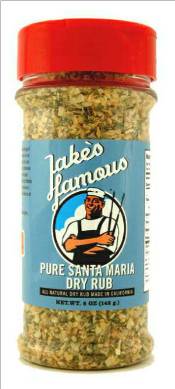
Pure Santa Maria Dry Rub that name practically says it all, Pure.  This is one of the few bbq rubs on the market today that literally does exactly what the name says it is.  Santa Maria for those not in the know is a city or as most would say a region in which true tri tip barbecues were created.  This region nestled between the California cities of San Luis Obispo and Santa Barbara all share in this form of cooking tri tip.  Tri tip is effectively a triangular piece of meat from near the front legs of the steer is cut away and trimmed leaving a reasonable amount of fat or as we call it the "fat cap" on the meat which will render enhancing the flavor of the meat.  The meat which when properly cooked is seasoned with the sparsest amount of basic seasonings salt, pepper, garlic and enhanced with onion and mustard and just the right amount of dried parsley.  The meat is properly rested for absorption then seared on both or all sides first then relocated on an adjustable grill such that the meat is indirectly cooked or roasted until done.  The meat is cut perpendicular to the grain wherein the results will leave even the most ambivalent with smiles of joy.  This is true Western cooking and the meat and dry rub represent the best the region has to offer.  


Pure Santa Maria Dry Rub photo

There are many impostors out their now but one must consider that true rubs carry no more that 6 basic spices to achieve the desired end result.  Larger form granules of salt, and pepper hearken back to the days of rustic ingredients all focused on producing the perfect bite and flavor. 

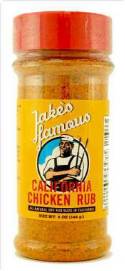
California Chicken Dry Rub, never before has their been a better more focused dry rub that serves one key food category.  The chicken rub does just that by using the very elements necessary to break down that pathways of tenderness for chicken. In most cases one might think chicken to be relatively easy to season but it's exactly the opposite.  Chicken can be the toughest of all poultry to season ahead of turkey and game hens.  In cases where there is no skin the seasonings may just fall off or burn up on contact with the grill. Therefore it is primary that one properly season the meat with spices and herbs to complement the subtle flavors of the chicken. 


California Chicken Dry Rub photo

Chicken may be dry and tasteless if not properly managed and we've overcome that with turmeric that not only leaves a golden color on the meat but almost Mediterranean flavor combined with ample hints of garlic, paprika, onions and for spice just a hint of cayenne pepper.  Add those ingredients along with a specific hint of brown sugar and you've got one of the best savory, salty, subtle sweet bbq rubs money can buy. This is truly a great chicken rub that we can't talk enough about.  It is superior at resting and delivering tenderness through its capillary action and when properly seasoned will produce staggering results that will change how you think about chicken.  

Memphis Blues Dry Rub contains an almost unmistakable element of flavor, one that you can just barely put your hand on.  You know what it is in the back of your mind but you just can't seem to find the words for that particular element of uniqueness.  That uniqueness is defined by two key elements celery seeds and coriander.  Two key elements that are as unique by themselves as the city that holds them up in legendary fashion in their namesake dry rubs.  Traditionally Memphis style ribs are rubbed with their special blend of seasonings then grilled for long periods of time. The ribs are then rested and dusted with the Memphis style rub just before being brought to the table.


Memphis Blues Dry Rub photo


The seasonings are adhered by the juiciness of the moisture resulting from the barbecue process.  When the ribs are cut and served the eater receives the aromatic effects of the celery seeds, coriander, thyme, pepper, garlic, cumin, mustard and more.  The one thing they won't have to worry about in our Memphis Blues Dry rub is the addition of sugar either in the form of raw white or brown sugar.  We've created a Memphis Style Dry Rub borne from our direct experiences in Memphis.  A light dusting after barbecue is just enough to deliver the savory flavors of this dry rub. Elegant in appearance and wholesome in taste.  And with our Memphis Blues Dry Rub taste is what you want and what we deliver all wrapped up is a nice little see through container where we hide nothing from the buyer.  The last thing we want to do is leave rubs without the proper directions which is why we've detailed instructions and BBQ Recipes  right on our website that take your ribs to the next level.  What's the use of barbecue if the results turn out less than satisfactory and that's why we take all the guess work out of the process. 

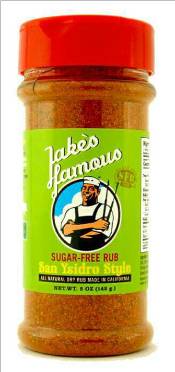
San Ysidro Rub as unique as the name. This by far is our most ambitious dry rub.  Again this is a Sugar Free dry rub but one that focuses directly on the cleaner elements of barbecue.  Exacting blends of smoked salts, garlic, Hungarian Paprika, coarse ground black pepper, and hints of turmeric and onions all compliment this truly audacious dry rub.  


San Ysidro Dry Rub photo

This is a bbq rub that drives flavor but not through the use of sugar.  Key to this dry rub is its use on vegetables of all shapes and sizes particularly potatoes, roasted carrots, egg plant, yellow squash and more.  The bbq rub is perfect for those who must consider a dry rub that would affect their glycemic index or more specifically for those who have certain sensitivities to glucose or sugar.  The bbq rub can be shaken or rubbed onto meats, or can be made into a paste through the addition of olive oil then spread evenly on ribs, chicken, or fish.  After cooking a light dusting of the rub can be added to increase the flavor profile.  This is a barbecue rub that is a cut above and as we say it's about time that someone consider the effects of sugar intake not only directly but through things like barbecue and the addition of barbecue rubs.  As my friends and I like to say "move quickly" as this truly is a target rich environment where barbecue rubs are concerned.  

These are the 7 Best BBQ Rubs you can buy.
We believe these rubs will improve the flavor of your barbecue without a doubt.  See our website "Jake's Famous" and gain access to our stable of fine bbq rubs and sauces.  And when you do check out our products we've got a special offer for you at Checkout.  Get 10% OFF pricing on our award winning dry rubs, sauces and seasonings.  You'll get that immediate 10% OFF when you use Jake's product savings Code: 1707200910 at checkout. Get all our BBQ Rubs Today!

Jake


Friday, February 8, 2019

BBQ Ribs In The Oven with Dauphinois Potatoes

Making Ribs couldn't be easier when following our post on Ribs in the Oven.  In addition we add in a nice accompaniment Dauphinois Potatoes also know as "Pommes or Gratin Potatoes".

Ribs in the Oven is wonderful especially when it's cold outside and either you can't or just don't want to use your grill.  Follow this simple process and you'll have the best tasting ribs ever.


First let's consider just how much work you want to do.  Personally, I consider the indoor oven process the easiest of the many variations toward using heat to make ribs.  I have a process on our website Jake's Famous Foods that we call Lazy Man ribs and that process is designed specifically for those who don't want to exert too much effort in making their ribs.  So, for this effort we'll be using variations of the Lazy Man approach and generally a standard approach that we tend to use whenever we make ribs indoor.

Continuing on we first select the ribs we want to make.  There are three or four basic cuts of ribs from Country Style to St. Louis to Baby Back, Spareribs and so on.  We'll be focusing on the general pork versions of ribs as the beef process tends to move things in a little different direction but not by much.  It's important to know that the selection or type of ribs does not affect the process. So, you can have any version you want.

Second, it's important to clean your ribs thoroughly.  It doesn't matter if your ribs were cut, packaged and frozen or taken directly from the hog and trimmed by a butcher.  Each rib rack can have bits of bone and debris from the cutting and packaging process that we really don't want while cooking.

Trim off the excess film on the back of the ribs.  Remove the film while close to room temperature with a paper towel.  You may have to slip a butter knife under the film to get it started but once you do pull firmly on the film toward the opposite end of the rack and try to remove the film as completely as possible.

With the film removed we've reached a decision point.  We call this a decision point because you can choose to take this next step or leave it out.  That step is the simple application of Yellow Mustard.  Many of the BBQ Pitmasters and Competition Experts employ this step and we highly recommend it especially if your ribs were frozen and thawed.

Yellow mustard helps in the tenderizing of your ribs.  It's relatively cheap and requires almost no effort in the process.  All that is needed is the Mustard, and a bag for storage.

If you've chosen to use the mustard follow these steps.  If not you can jump ahead to step 3.  Cover the entire rack of ribs with mustard.  Place the rack of ribs into a storage bag and place in the refrigerator for a minimum of 1 hour.  After resting in the fridge remove the ribs at least 30 minutes before cooking and allow them to reach room temperature in the storage bag.

Third, locate a large pan and a sheet of aluminum foil enough to extend the entire length of the ribs.  We will be layering the foil in the pan and will run the foil up the sides of the pan.  We will not be covering the ribs as this is and open bake process.

Fourth, after the ribs have rested for 30 minutes and the pan and foil have been assembled set your oven to 350 degrees.

Fifth, now comes the dry rub.  We use a 50/50 combination of Jake's Famous Memphis Style Dry Rub and Jake's Santa Barbara Smoked Dry Rub.  The combination yields spiciness with just the right hints of maple flavored sugar, coarse black pepper, smoked salt and chili powder.  Coat the entire surface of the ribs both sides and place the ribs in the pan meat side facing you.

Sixth, place the ribs in the oven and set a timer for 2 hours.  After the two hour period remove the ribs and baste with your favorite barbecue sauce.  We like to use our Jake's Famous Really Nice Medium Hot BBQ Sauce.  The sauce is flavorful with just the right spiciness the keep the ribs interesting.  Place the ribs back in the oven and set your timer for 1 hour.

Time to make the Dauphinois Potatoes.  Collect 4 or 5 small to medium white or Yukon style potatoes.  Remove the skin and cut the potatoes in half.  With a sharp knife cut the half section in very thin slices.  Perform the same action with all the potatoes.  Follow the potatoes with a Leek.  Thoroughly wash the leek removing any outer skin that is not useful or tough.  Cut the leek into small pieces and set aside.

With the leek and potatoes cut it's time to trim and shred cheese. We like shredding Gruyere and Colby along with Gouda cheese.  Also gather black pepper, kosher salt and heavy cream as well as a medium sized backing container.

With all the segments collected begin by pouring about three tablespoons of cream in the container ensuring that the bottom of the container is coated.  Now add a layer of potatoes followed by leeks, salt, pepper and cheese.  Repeat the process, potatoes, leeks, salt, pepper, cheese, cream.  Continue layering until you reach to top of the container.  Finish by adding in Parmesan cheese topped with Paprika for nice color.  Once the entire container is completed place the container in the same oven with the ribs.  The potatoes will require a minimum of 1 hour to cook and can take up to 1-1/2 hours to finish cooking depending on the oven.

Seventh, after the ribs have completed cooking it's time for the resting phase.  We recommend that you allow the ribs to rest for at least 30 minutes before serving.  Place the rib pan on the counter or in an unheated cooler and cover with a large towel.  The towel will slow down the heat evaporation process allowing the meat to cool evenly.

After an hour or so check on the potatoes.  The Dauphinois Potatoes should have a nice golden top with the cheese and cream bubbling.  Remove the potatoes from the oven and place on the counter or stove top and allow to rest for at least 20-30 minutes before serving.


With the Ribs and the Dauphinois Potatoes rest slowly separate the ribs from the pan and place on a cutting board.  Follow the separation point between the ribs and cut just enough ribs for you or your guests.  A normal rack of ribs is about 13 bones so if you have 1 other guests we suggest you don't cut off more that you would normally eat in a setting.  Maybe 4 or 5 ribs which would mean the remainder can be slipped into a storage bag for later consumption.

The Dauphinois potatoes can be served onto a dish and consumed right away.  Just be aware that the potatoes might have some reserve heat left over from the cooking process.

That completes our easy to follow Ribs in the Oven with Dauphinois Potato process.  We hope you've enjoyed the easy to follow steps and look forward toward see your comments.

Jake

We've included our video of the entire process making the results even easier.  See below.


Monday, December 17, 2018

Smoked Beef Brisket Recipe Easy and Fast How To UDS


Smoked Beef Brisket UDS Recipe
The other day I was tooling around our local grocery meat counter and I saw a small sectioned Beef Brisket Flat.  Immediately, I thought about the smells and tastes of Brisket.  I've had brisket in many forms but never in a one or two version fashion.  And it's not so much the fact that the meal was made for one or two but that there was a process that allowed someone to make it easily.  So, I set out to chronicle my steps in making this mouthwatering Brisket treat.  The process is relatively easy but does require time.  Brisket in some ways is similar to Tri-Tip but requires even more time in the cooking process to make the meat tender.  Follow along as I walk you through my process.  I'm also including the ingredients and the listing of spices and rubs that I used as well as the wood and charcoal. Let's get started.

Let's discuss the idea of time.  As a general means this brisket process will take about 8 hours.  We say 8 because first off you'll be cleaning and seasoning the meat.  Following those steps you'll need to rest the meat for a period of time.  Thereafter you'll be cooking the meat which is in this case smoking the meat so you'll need a minimum of 5 hours.  The total number of hours is over 8 but in the case of a quick process you can get the job done in less time just don't expect completely buttery results in which case you'll be fine. 

First off in the process I purchased a 3 pound flat of Beef Brisket.  Brisket as you may know is a specific cut of Beef from the lower chest and breast area of beef or veal.  There are a series of what are considered primal cuts in which the meat is typically separated from the structure of an animal during the butchering process.  Some of the primal cuts are the loin, rib, chuck segments, ham or the round.  And because of the location in which brisket is derived the meat is also called a working section of the animal where the superficial and deep pectoral muscles reside.  Since cows and venison don't have collar bones then this brisket section typically supports the bulk of the weight of the animal as it stands or moves.  To make a long story shorter this meat segment is quite tough and requires the right process of cooking in order to make the meat tender.  

Now with a clear understanding of the meat in hand let's move our process along.  Having purchased the flat section realizing that a full brisket has two primary segments, the flat and the point.  As a point of reference the point is typically where burnt ends are made.  The meat is cooked then sliced away and joined with a liquid in a container and further cooked until tender.  

As for the flat this section must be prepared to make the most of it.  Let's start by cleaning the meat thoroughly, and we're just going to do this with some warm not too hot water.  Remove any grit or excess segments left over from the butchering process.  It's also a good idea to note the direction of the grain of the meat.  This will set a mental image for you as to where you will be cutting once the smoking is completed and the meat is covered with bark and seasoning.  

Take a paper towel and pat the meat completely dry.  Place the meat in a container and hold at room temperature.  Now, I've decided that I'm not going to flavor the meat through injection so I'm simply going to prep the meat through a dry rub that will create a nice crust to help preserve the flavors in the meat.  I'll need two things to create the flavor level I'm seeking.  I'll need a combination of salts and peppers as well I'll need some sugars and herbs to layer over the meat to create the finished taste.  

I'll be starting with our Jake's Famous brand Santa Maria Dry Rub. 3 Tablespoons.  Why this rub?  This rub contains ample amounts of Kosher salt, Coarse ground Black Pepper and Granulated Garlic.  In the barbecue world this combination is known as SPG but for our purposes we'll just focus on the fact that we're using Salt, Pepper and Garlic in combination with Parsley, and hints of Onion and Mustard spices.  We use this combination of Salt, Pepper, and Garlic because it will draw some moisture out of the meat as well as leave behind a nice familiar layer of savory Garlic and Pepper.  We'll let the combination of salts and peppers rest on the meat for about and hour.  

Following the hour of resting you'll notice some of the liquid has been pulled out of the meat.  Not to worry this is supposed to happen with the combination of spices and herbs we used.  So, let's build some flavor next.  We'll want to layer on some sugars and herbs to supplement the salts and peppers and I believe the best way to do that is through the use of our Tri Tip Steak and Rib Rub, 3 Tablespoons.  This is a refined steak and rib rub that does quadruple duty as a brisket rub, chicken rub and fish rub.  The combinations of the purest brown sugar, garlic, Smoked Salt, additional Black Pepper combined with herbs of tarragon and oregano fully bolstered by onion, mustard, rich, smoky Paprika are quintessential in building the right levels of flavor for our brisket. 

With the brisket fully coated it's time to rest the meat and allow the flavors to combine and build. Place the meat in a sealed container and place within your refrigerator.  The meat must be in the standard section of the fridge as it does not require overt cooling or freezing.   And since I purchased the meat at mid day it's too late for me to get my smoker going considering the number of hours needed to complete the process.  So, let's spend the time on the materials needed for the next days barbecue.  We'll need at least a 1/2 full bag of charcoal as well as a 1/3 bag full of lump charcoal hickory version preferably.  I'll be using my UDS (Ugly Drum Smoker) in addition I'll have a set of remote thermometer gauges which I'll use to accurately reflect the temperature within the grill as well as the temperature of the brisket. 

I will also be using wood smoke to build the flavors of the brisket.  I'll be using about 15 ounces of Red Oak Wood.  This will be placed in the charcoal basket in the form of 4 or 5 chunks and cut segments.  Place the wood around the basket so as the charcoal burns from center to outside as the wood is consumed along with the charcoal driving wood smoke upward. 

Arrange the charcoal briquettes around the outer edge of the basket.  Place the hickory lump charcoal in the center portion of the basket surrounded by the charcoal briquettes.  I'll be using some starter lighting cubes so I won't need any harsh chemical starters that may affect the final taste of the meat.  Position the smoker away from any wood sources like trees, wood planks, paper or sides of houses.  Now seal up the unit until it's time to use it on the next morning. 

One thing I like to do before the next morning is consider the last thing first.  This may seem odd but what it means is let's consider when we want to be eating this brisket.  Ultimately calculating time in this way will determine the best and most appropriate time for starting the grill.  So, let's think about this. I'd like to be eating somewhere around 4 or 5 PM.  I know I will rest the brisket for a minimum 2 hour period which puts me back around 2 PM.  I will have wrapped the brisket with a steaming liquid and allowed the meat to steam on the smoker for 2 hours at least.  So, with the steaming time and preparation time that moves me back to 11:30 AM.  My Brisket is approximately 3 pounds so I'll need to smoke the meat until it reaches as least 162 degrees before I consider the wrapping process.  So, this smoking process may take up to 2-1/2 hours as I will be seeking a smoking temperature of about 225 to 250 degrees on average.  Now working backward from 11:30 AM for 2-1/2 hours puts us at around 9 AM.  Last but not least is the amount of time it will take to get my charcoal up to temperature.  I would expect that my smoker will take about 30 minutes to regulate the temperature so overall and considering the fact that I filled the charcoal the night before I'll need to start the fire around 8:15 or 8:30 AM. 

The overall efficiency in this process is knowing beforehand how much time will be required to complete all the tasks then working efficiently within those time-frames to get things done. 

Next day.  It's now 7 AM I'm up and ready to get the smoker going.  I've checked my brisket and it looks very good.  I've checked the charcoal combination and it looks very good as well.  One other thing to focus on is the external temperature, is it sunny or cold or rainy.  If rainy, cold or moist temperatures these will slow down the smoking process extending the time by at least 30 minutes. 

Now it's 8 AM and with everything ready let's go ahead and start the charcoal basket.  With the starter lit and charcoal combination slowly starting let's go ahead and remove the brisket from the fridge and allow it to rest on the kitchen counter while the charcoal is starting.  The resting process will bring the meat to room temperature which can reduce the amount of heat and time required to cook the brisket. 

One thing on the lighting of charcoal.  I am reminded that I often use a Chimney Starter to get my charcoal going.  I could of course use this but by doing so I'm forcing a lot of heat into the smoker all at one point.  Our object here is to smoke the meat for a considerable time-frame which will help tenderize the brisket.  So, for this purpose I will use my Chimney Starter at some other time. 

Make sure the vent door is wide open which will allow maximum oxygen to the charcoals as they burn. Also ensure that the top of the smoker is off for at least 15 minutes as the charcoal gets started.  After 15 minutes place the grill plate in the smoker followed by the addition of a heat probe.  Place the smoker lid on the unit and begin taking note of the temperature as the smoker settles into it's standard smoking range.  As the temperature notches upward closer to the 225-250 degree range begin adjusting the vent door to about 1/2 closed.  This will further moderate the temperature and will ensure that our readings are accurate.  It's now 8:20 AM let's confirm that our temperature is at the right level and that the wood is burning evenly.  If all is right it's time to get the meat on the grill. 

Insert your second probe sensor into the brisket about 1/2 way into the meat.  Key point we will be inserting the probe on the top of the meat with the fat side on the bottom. If you do not have a heat diversion plate on your smoker you can set the brisket to the outer side of the grate so as not to sear the meat while it's being smoked.  Place the meat on the smoker fat side in contact with the grill plate.  Confirm the position of the meat, connect the sensors and place the lid on the grill. Now comes the monitoring process.  This stage is focused mainly on ensuring that the temperature remains level within the range. 

Note the initial temperature of the brisket, remember we are looking for a temperature of about 162 degrees within the center of the meat.  It's a good idea to do a temperature check about every 15-20 minutes.  If you have an alarm setting on your remote thermometer set the gauge for the 162 degrees then go about your business. 

Prior to reaching the 162 degree temperature we will be preparing a steam bath for the smoked brisket.  Pull two large sheets of aluminum foil enough to completely wrap the meat with about 5 inches left over on each side.  Place one sheet lengthwise and the other at 90 degrees underneath the top sheet.  Set aside 1/2 cup of beef broth and about 2 tablespoons of brown sugar.  These will be used to steam the meat and add just a slight sweetness to the overall taste. 

At 162 degrees remove the brisket and place it on the top sheet.  Fold the foil inward on the sides and the ends then pour in 1 tablespoon of brown sugar per lengthwise side next to the brisket.  Follow that with 1/4 cup of beef broth per side.  Fold over the foil to catch the liquids.  Fold over the 2nd piece of foil to seal in the first piece and the liquids.  Return the sealed brisket to the grill.  Now pierce the foil with the temperature probe and again place it as close to center of the meat as possible without pushing through the meat.  Place the lid back on the smoker and note the temperature of the heat from the smoker as well as the temperature of the meat. 

One thing that can and does happen is the uneven burning of charcoal in the basket.  You may notice a dip in the overall temperature of the smoker.  If your smoker drops below 210 degrees you will need to add some charcoal briquettes to keep the heat up.  Note, place the charcoal in areas where you see red zones this means that charcoal is avidly being burned and by adding your units this will shorten the time toward keeping the heat at the right level.  As an option this is where the use of the Chimney Starter is desired.  In the starter place 10 charcoal cubes.  Light the cubes and allow them to burn for at least 10 minutes.  Once burned you can carefully remove the grill grate with the brisket wrap on it and pour the charcoal near the center of the basket.  If you have flip grates on your grill turn the grates and pour the charcoal into the basket.  Be careful not to get burned.  There's a lot of heat from the starter and embers will move upward with the flow of air so keep an eye on things and wear heavy protective gloves. 

Now our final smoking temperature of the meat is 200 degrees.  Early in the process you would have reset your remote gauge to accept the new temperature reading.  After the reading is reached remove the brisket in foil and place in a metal serving tray.  Cover the tray with a large towel enough to full cover.  Place the tray and towel on a rack in your oven with the oven off or in a large cooler.  Keep in mind the tray will need to remain undisturbed for 2 hours before even thinking about serving.  If you need your oven during that two hour period try to find some other location in which the tray can be sealed undisturbed. 

After the 2 hour resting period remove the brisket from the foil and place it on a cutting board.  Use a large serrated knife and first find the direction of the meat grain pattern.  Cut slices approximately 1/8 inch to 1/4 inch across the grain and layer out.  Note how the fat at the bottom has rendered into the meat.  You can leave the fat on or remove it depending on what you or your guests desire. 

Beef Brisket Slices


Collect the liquids into a container with a lid.  When cooled the fat will solidify near the top of the liquid.  Remove the fat from the liquid and hold aside as an amazing au jus pour over.  To reuse just microwave about 20 or 30 seconds then pour over the meat. 

The results of your Smoked Brisket should be awesome.  The meat should be tender and extremely pliable.  Those are the signs that the brisket was cooked at the right temperature and that the seasonings used did their jobs.  In addition the meat will have a savory, subtle peppery finish that complements the smoked brisket and is just wonderful.

We hope you've enjoyed how we explained making a 3 pound brisket using a UDS.  Often times it's hard to keep up with all the items and ingredients used in the process so I've captured that list below.  Be sure to checkout our vast array of amazing products and use code: Barbecue10 for an immediate 10% savings on all items on our Jake's Famous Foods. website.

Smoking List:

3 Pound Brisket
Water
Paper Towels
Refrigerator
Jake's Santa Maria Dry Rub
Jake's Tri Tip Steak and Rib Rub
UDS Ugly Drum Smoker
1/2 bag of charcoal briquettes
1/3 bag of Hickory Lump charcoal
15 Ounces Red Oak Smoking Wood
Lighter cubes
Aluminum Foil
Tongs
Beef Broth
Brown Sugar
Remote Sensing Temperature Gauge and Probes
Heavy Gloves
Chimney Starter
Metal tray
Towel
Oven
Cutting Board
Serrated cutting blade
Container for Au Jus storage
8 Hours minimum for preparation and smoking


I've enjoyed my 55 gallon drum grill.  I've enjoyed it so much so that I've commissioned an additional grill.  This grill is a vertically standing UDS Ugly Drum Smoker unit that I used to make this wonderful brisket.  In this unit the charcoal is lit and the heat rising along with smoke from wood chunks delivers an enormously flavorful result.  To get an idea of what I've actually done see the picture below. 


Red Top UDS Ugly Drum Smoker and BBQ Grill

Happy Barbecue...
Jake


Monday, November 5, 2018

Instant Pot BBQ Rib Recipe And Why You Should Make It


Instant pot bbq ribs recipe

When the weather changes and cooking and grilling tend to move more indoors never fear that you can't have your favorite homemade ribs.  In fact, with our Instant Pot Ribs (IPR) Recipe you can have those famous homemade barbecue ribs anytime you want.  With our post and recipe, you'll be able to get the job done and enjoy those savory or sweet homemade barbecue ribs at your leisure.  Follow along with us as we take you through the process.

It's always a good idea to get some foundation in place before you build your recipe house.  So, let get to some understanding about what an Instant Pot is and what it isn't.

Instant Pot is the process of using pressure the make and cook food products.  The actual history of Instant Pot or pressurized cooking goes like this.

The pressure cooking method of cooking in a sealed vessel not permitting steam to escape below a preset pressure.  Because the boiling point of water increases as the pressure increases, the pressure built up inside the cooker allows the liquid in the cooking pot to rise to a higher temperature before boiling.

The pressure cooker was invented by Denis Papin, a French physicist, in 1679.  However, it only became a household cooking appliance during World War II when the people realized how much fuel they could save due to much shorter cooking time and the ability to cook cheaper cuts of meat easily.  Pressure cooking is often used to simulate the effects of long braising or simmering in shorter periods of time.

Modern-day Pressure Cookers or Instant Pots are technological marvels in their ability to have time and temperature settings in multiple modes.  These units are larger and with multiple inner containers for myriad uses.  Instant Pot Cookers can perform the duties of Pressure Cooker, Slow Timed Cooker, Rice Cooker, Yogurt Maker, Cake Batter Maker, Egg Timed Cooker, Sauté for meats and vegetables, Steamer, Warmer as well as general Sterilizer.


instant pot barbecue ribs
Instant Pot Barbecue Ribs


Now that we know about Instant Pots how exactly do you operate one? We know that cooking food using water or liquid in a sealed vessel produces steam which causes pressure.  The containment vessel is specifically designed to withstand the internal pressures created by the increase in steam.  The cooker works by trapping the steam produced with the final results being an increase in internal pressure and temperature.  After the steam and pressure contain the ingredients forcing the flavors that would normally escape remaining in foods the trapped steam is then allowed to be released slowly so that the vessel can be opened safely.

How do you use an Instant Pot to make Ribs? Similar to that of a barbecue grill the actual cooking process is about time and temperature.  With a barbecue grill, there is usually a third component that comes into play and that can most often be the use of wood smoke in the cooking process.  And since an Instant Pot is capable of producing heat and a period of time in a controlled fashion then the meat can be cooked similar to that of a barbecue grill.  There is, of course, one exception.  Simply put an Instant Pot focuses on the use of steam or moisture to do its job.  Contrary to that a barbecue grill uses heat to drive out moisture and in the exchange process that heat when slowly applied for extended works to break down the collagen, fibers, tissues, and fats which in turn makes the meat tender.

instant pot example unit
Instant Pot  Pressure Cooker Unit

An Instant Pot may make the meat appear somewhat soggy depending on the period in which the meat is cooked.  There are ways to offset this additional moisture but requires the addition of a secondary appliance.  That appliance is the use of your inside oven or stove.  Typically in the case of meats where an externally somewhat dry surface has required the stove or oven is turned to a high range for a short period of time and the meat is broiled to achieve the desired dryness.

In our Instant Pot IPR recipe, we will make use of both the Instant Pot and your oven.  We'll also make use of foil and a container to aid in controlling the cleanup process.  Let's get started making those ribs.

As with all rib recipes, one first wants to make sure they have all the necessary ingredients and appliances to get the job done.  You'll need your Instant Pot, Oven, Barbecue Sauce, Dry Rub, and Foil.  We'll provide a recipe for a quick barbecue sauce but for those who plan ahead and want a great gluten-free barbecue sauce we offer our Jake's Really Good Mild BBQ sauce.  If you like the process of creating and adjusting recipes then just follow our quick recipe below.

Southern Style Smoky BBQ Sauce

Ingredients

2 Quarts White Vinegar
2 Cups Splenda No Calorie Sweetener (As an Option 2 Cups White Sugar)
1-1/2 Cups Ketchup
½ Cup Worcestershire Sauce
¼ Cup Hot Sauce
¼ Cup Salt
¼ Cup Ground Black Pepper
1/2 Teaspoon Liquid Smoke


What about smoke in this IPR?

It's common knowledge that Pressure Pots or Instant cookers do not impart smoke flavor into ribs.  However, we can induce smoke in one of the simplest ways possible.  There are a number of liquid smoke products on the market now which make the introduction process simple.  Add approximately 1/2 Teaspoon as the smoke flavor is highly concentrated.  This amount of smoke flavor when mixed with recipes that contain no or small amounts of smoke will thoroughly infuse the contents with smoke flavor.  Be careful not to overdo the smoke as the meal may become bitter.

Note, it is not a requirement that you add liquid smoke.  Many people prefer the natural taste of the meat without smoke so just prepare the recipe as normal and never think about adding smoke.

Blend the ingredients until smooth.  Place in a cooking pot and cook on medium high for 20 minutes until the sauce begins to boil.  Once boiling reduces the heat to simmer and stir for 5 additional minutes.  After simmer removes from heat and lets rest for 30 minutes while the flavors mature and meld.

Instant pot sample unit with ribs inside
Instant Pot Ribs Inside Unit

Ribs should be selected on the basis of appearance in that the ribs are not gray or dark in color.  Typically ribs should look reddish or somewhat off red in color depending on whether the ribs are cut at the butcher counter or have been thawed after being packed in a frozen state.

Thereafter the ribs must be thoroughly cleaned and any grit or excess bone chips removed.  The white and sometimes silver membrane should be removed although it is not absolutely necessary.  The membranes removal aids in the absorption of seasoning and steam in the cooking process.  Remove the membrane at room temperature with a paper towel and butter knife used to get under the membrane.

Season the ribs using either our more than suitable Tri-Tip, Steak and Rib Natural Dry Rub or for a little more spiciness use our California Chipotle Rub or utilize one of your own dry rubs recipes.  We've also added a quick dry rub recipe you can make at home with some basic ingredients.  See the dry rub recipe below:

Dry Rub Brown Sugar Sweet and Spicy Recipe
  • 1 teaspoon ground black pepper
  • 2 teaspoons ground cumin
  • 1 tablespoon Hungarian paprika
  • 1/2 teaspoon ground coriander seed
  • 1/2 teaspoon cayenne pepper
  • 1 tablespoon brown sugar
  • 2 teaspoons granulated garlic
  • 1 tablespoon Kosher salt

Apply the dry rub after the ribs have been cleaned.  Allow the dry rub the marinate the ribs for a minimum of 1 hour.  If you can marinate the ribs for a longer period up to 12 hours that works better in imparting the flavors of the rub to the meat.

Once the meat is marinated position your Instant Pot in a well-ventilated area or under a stove hood so that wafting aromas and heat can be vented out of the cooking space.

Pour the barbecue into the container of the Instant Pot.  Arrange the seasoned ribs inside the container in a circular fashion.  Set the Instant Pot to High with the timer set for 20 minutes.  Close and seal the lid and begin cooking.

After 10 minutes into the Instant Pot cooking cycle set your oven to the broiler setting and turn on. It will take approximately 10 minutes for the broiler to achieve the full heat level.


Instant Pot Pressure Cooker ribs and salad
Instant Pot Ribs Sample with Salad


Once the ribs have reached their 20-minute cycle carefully release the heat from the Instant Pot.  Remove the lid and with tongs carefully remove the ribs onto a foil-lined tray.    Collect the BBQ sauce in the bottom of the Instant Pot container.  Coat the ribs with the collected sauce mix to your desired thickness.  Quickly move the tray into the oven and allow the ribs to broil under heat for 5 minutes.  Remove the ribs and coat again with the barbecue sauce.  Replace the ribs in the oven and broil for an additional 5 minutes.  Then remove the ribs and allow to rest for 10 minutes.

After resting slice and serve.

If you want different Rub Recipe options I've added three more below:

Culinary Rib Rub Recipe
  • 1 tablespoon fresh ground black pepper
  • 2 teaspoons salt
  • 1/2 tablespoon paprika
  • 1 teaspoon garlic powder
  • 1 teaspoon onion powder
  • 1 teaspoon dried rosemary
  • 1/4 teaspoon cayenne pepper
  • 1/2 tsp Dijon mustard
  • 1/3 cup red wine vinegar
  • 1/3 cup vegetable oil
  • 4 cloves crushed garlic

Citrus Style Tri Tip, Dry Rub Recipe
  • 4 teaspoons Garlic Powder
  • 2 teaspoons Paprika
  • 2 teaspoons Dried Orange Peel
  • 1 teaspoon Chili Powder
  • 1/2 teaspoon Black Pepper
  • 1/2 teaspoon Kosher Salt 

Homemade Cajun Rib Rub Recipe
  • 8 tablespoons paprika
  • 3 tablespoons cayenne
  • 6 tablespoons ground black pepper
  • 4 tablespoons garlic ground
  • 3 tablespoons onion ground
  • 6 tablespoons sea salt
  • 2 tablespoons ground cumin
  • 4 tablespoons dried oregano
  • 4 tablespoons dried thyme

We enjoy the use of our Instant Pot and along with our many barbecue grills we find that as the weather changes we are never limited by external conditions in deciding what and when we eat.  Try our Instant Pot IPR and BBQ Sauce Recipe today. Also Real Food Dietitians and Kylee Cooks both do a really good job at providing instant pot recipes.

Also, as always we pride ourselves on making some pretty good products.  For those who've never had them here's your chance to get them along with a pretty sweet discount.  Travel to our website at Jake's Famous Foods and use code: Barbecue10 to take 10% off your first order.  Use the code at Checkout.


One last thing....after you're done with your ribs it would be great to have a tasty dessert. I've included my Smoked Peach Sweet Potato Cobber Recipe for your viewing.


Thanks for reading and Happy Barbecue!

Jake


Friday, November 2, 2018

What Does Barbecue Sauce Actually Do? And why should You use it or even care?


BBQ Sauce recipe
BBQ Sauce Recipe

I was working on one of my recipes the other day when a customer asked me a couple of unique questions related to barbecue sauce.  They've been buying the product for a number of years but never really questioned why our BBQ sauce or any other company's barbecue sauce was considered the perfect accompaniment or main driver for their barbecue ribs or barbecue chicken.  So they thought they would ask the seemingly somewhat innocent question "What does barbecue sauce actually do?  And why should we use it or even care?

Well, you can imagine my surprise especially from a customer that had been buying our bbq sauce for about three years now.  After the interaction, I thought I wonder how many other people have the same or similar questions?  And do they actually know what they're buying or are their purchases related to word of mouth or simple focuses on taste?  I thought I would delve deeper than the normal surface level review so this post is set out to specifically answer the question on barbecue sauce and the myriad reasons for using it.

First, let's start with some common terms for barbecue sauce.  I think many people are aware of where the term barbecue is derived.  If not, the terms go like this, to roast or broil on a rack or revolving spit over or before a source of heat (such as hot coals).  Further, a large animal (such as a steer) roasted whole or split over an open fire or a fire in a pit.  Barbecue at its origins is derived from the word "Barbacoa" in which "Barbecue" is the English word adaptation.  Further, Barbacoa is from the Taino Native American tribe of the Caribbean and Florida regions which employed the methods of open pit roasting worked to completely cook meats for a sustained period of time.

When we employ the derived term "Barbecue" and combine that with the evolution of the process over many years it was determined by trial or by the process that certain liquids could extend the shelf life of aging meats all while improving the actual flavor of the meats.  Without the advent of salt and pepper of meats, the end result would be pretty boring.

The first uses of barbecue sauce appeared in the early 17th century by English and French settlers through the application of mustard sauces to enhance the flavors of their meats.  True commercialization of BBQ sauce did not take place until sometime near or not long after the creation of ketchup around 1909.

But what does barbecue sauce actually do?  Barbecue sauce through its combination of mixed ingredients acts in many cases to improve the quality of meats.  The barbecue sauce was never meant to take over the taste of meat just ask the person that spends 12 plus hours making a brisket with just a hint of smoke.  The last thing someone who has slaved over so long wants to see is their efforts quenched by a nondescript barbecue sauce.  But don't let that get in the way of your path to discovery.  BBQ Sauce depending on the ingredient listing will actually act as a marinade prior to the grilling or slow cooking process.  So, for those who hold great negative opinions about the sauce must consider its actual value in that all meats are not created equal and certainly not butter soft after grilling.

Should you use barbecue sauce?  I say, why not, especially if you feel that the meat you've chosen is not as superior as you'd like it to be.  But if you've had the chance to get your lips around some really superior seasoned and grill meats then skip the added dressing and focus on the results of the grill masters effort.

BBQ Sauce on pork
BBQ Sauce on Grilled Pork


Being in the business of BBQ rubs and sauces I've had many people approach me on the concern over calorie counts.  Mostly I believe that people issue the negative comment about a product when they instinctively either don't understand it or effectively don't want it but have a little internal drive to say no when approached in some store demo.  By all means, if you'd rather not have something just say no, don't focus on the negatives when approached.  But for those that are concerned about calorie counts, I offer the following.

A reasonably good barbecue sauce will either use brown sugar or white sugar or honey or some form of Stevia as a primary sugary component.  There are a number of sauces that use corn syrup and the all too familiar hydrogenated corn syrup which in reality are actually the same thing since the Federal Government allows manufacturers the ability to split the quantity of corn syrup used into categories.  To the unlearned, this just appears as two separate products.  But to those in the know, it's a statement calling out loud and clear as to how much of the corn syrup is actually used.  In these cases, a reasonable calorie limit of 60 or 80 can go as high as 240 or 300 calories depending on the actual serving size.  And serving sizes are quoted in grams or tablespoons the average person is all the more confused as to the actual amount contained in the purchase size.

The truth of the actual matter is that the general public may on the off chance attend a barbecue 2 to 4 times over the course of an average summer.  And if you're fortunate you may choose to barbecue between 3 and 5 times over the course of the entire year.  We, unfortunately, do not consider how many times barbecue sauce is consumed in such small quantities as to be of no real concern where combined amounts of sauce are discussed.  I often tell my customers to focus on the event and the time spent with friends and relatives over the considerations of how much sugar or calories are contained in a BBQ sauce.  Of course, if you have a sensitivity to certain levels of sugar or salts then it would be wise to reconsider any use of the product at all.

Further on what a barbecue sauce actually does when used as a tenderizer.  The amount of time necessary to engage its tenderizing effects is strictly related to the number of ingredients contained in the formulation that yields an ability to marinate.  Specifically, things like mango, vinegar, oils, certain herbs, fruits such as berries these things all have marinating properties.  When placed in contact with meats their enzymes act to break down the fibers and tissues of the meat.  Minimum periods of time such as 30 minutes should be employed.

Take for example the marinating of seafood using citrus as the marinade.  The conversion from sushi to marinated fish takes only a short period of time.  And since barbecue sauce may use these ingredients in concert with sugars, salts and spices they may take much longer to perform the desired marinating effect.  We tell our customers to expect a minimum of 1 to 2 hours of marinating before the grilling process should start.  We also know that a customer can marinate a meat overnight for at least 12 to 14 hours without completely breaking down the fibers and tissues of the meat which would ultimately leave the meat in a somewhat soggy state.

What is the best type of barbecue sauce?  The best type of BBQ sauce is driven by the application, the preference or taste profile determines the experience that you want to impart to the meat and the audience to which the end result will be shared.  In certain parts of the United States the audience experiences mustard sauces, while others experience brown sugar and vinegar, and in some other parts of the country, it's considered a blatant sin to even think about the use of barbecue sauce on smoked meats.  Similarly, in Memphis, Tennessee you practically have an entire state split over whether or not barbecued meats should be finished "wet" or "dry".

For those who consider their purchase of a barbecue sauce, it's a good idea to keep an eye on the shelf life.  Overall the Federal Government casts some guidelines for shelf life but the actual shelf life of a product is primarily determined by the attending states Food and Drug Administration.  Barbecue products that have long shelf lives over two years typically have fewer live ingredients like tomatoes, fruits or herbs.  Those with short shelf lives similarly have an abundance of tomatoes, fruits and in some cases vegetables like carrots or live onions.  Short shelf life sauces can be very good, it's just important to be aware that one can't expect a sauce they bought in April to be around in August depending on the contents and the location in which the product was stored.

Is there really such a thing as Keto or Paleo barbecue sauce?  Moreover, why would you want one?  The trend toward Paleo or Keto focused foods has been heating up for years now.  All driven by the greater desire to have what we like to call "having your cake and eating it too" but just with fewer calories or carbohydrates.  A "Keto" or Ketonic diet is a very low-carb diet, which is classified as turning the body into a fat-burning system as more and more carbohydrates are removed.  Alternatively, a "Paleo" or Paleogenic is rich in nuts, fruits and vegetables and focuses on the elimination of grains and legumes "beans" from the diet.  The end result of each of these as related to barbecue sauce is the focus on a product that will act in concert with the specific diet plan.  We feature a barbecue sauce that is gluten-free and legume and wheat free.  This would be considered a key product option for those who are focused on both a Keto and Paleo Centric diet.

home made bbq sauce in glass container
BBQ Sauce Home Made

If your desire is to consider a full-flavored sauce especially in the case of making or using a barbecue sauce for ribs or a BBQ sauce for chicken then one may need to shy away from products that minimize the number of sugars and carbohydrates or limit the amount of fruit-based elements.

In summary and recommendation, Barbecue Sauce actually performs the act of flavoring foods and enhancing foods.  In pre-barbecue cases, BBQ Sauce will act to marinate foods over a minimum period of time in which tissues and fibers are broken down to soften meats.  Key barbecue sauce recipes are primarily determined by region along with specific barbecue types such as ribs, chicken, brisket or other types of meats.

And although some consider barbecue sauce to carry a certain level of calories we believe it's best to focus on the desired end result of the barbecue as opposed to the specific level of sugars or salts.  Keep in mind the average number of times you might consume a product over the course of a year then divide that actual amount over the meal and we believe you will find that total amount to be very small so as to make the consideration actually insignificant.

And with that said, our best selection of barbecue sauces is available on our website along with some excellent products each focused on the marination aspects of barbecue as well as the health and wellness benefits of the sauces.  There are gluten-free products as well as Monosodium Glutamate free products.  A short list of our best products are:

Really Good Mild Barbecue Sauce

Really Nice Medium Hot Barbecue Sauce

Really Hot Barbecue Sauce

Maple Bourbon Barbecue Sauce

Memphis Blues Barbecue Sauce

Texas Style Inspired Barbecue Sauce

These sauces along with our dry spice seasonings combine to produce some astonishing results.

We hope you've found this post informational and useful as you continue on the path to perfect barbecue nirvana.

In addition to the links above we are including our video on making barbecue sauces.  See below:


Happy barbecuing.

Jake

How to Clean Pork BBQ Ribs

Clean ribs is a primary requirement prior to barbecue.  But before you add dry rubs, marinades and seasoning, we'll need to spend some t...